Showing posts with label obituary. Show all posts

Friday, February 25, 2011

William "Bill" Crouch 1945-2011


I just received word that Bill Crouch died on February 21, 2011. He was 66 years old and had been in a coma for three weeks. The cause was respiratory arrest followed by cardiac arrest.

William M. Crouch, Jr., known as "Bill" to his friends, was one of these essential links to the world of cartooning.

Bill was born in January 25, 1945, in Bridgeport, CT, and attended Columbia University, graduating in 1967 with a BA in Art History. Bill raised some controversy with his senior thesis on comic art, a body of popular culture that had not received any critical scholarship to that point.

Bill volunteered for the US Air Force, serving for four years, from 1968 to 1972. He earned a Master of Arts degree from Pennsylvania State University a year later.

The death of his father caused Bill to return to Bridgeport to manage Equity Paper Company, the family business. He remained with the company, which was sold to Grossman Marketing Group in 1981, until 2008.

Paralleling those years, Bill became a well known comics writer and scholar, contributing to THE WORLD ENCYCLOPEDIA OF COMICS and 100 YEARS OF AMERICAN NEWSPAPER COMICS. With Walt Kelly's widow, Selby Kelly, Bill co-edited a series of five large trade paperbacks for Fireside/Simon & Schuster reprinting the strip during the 1980s. For eleven years beginning in 1978, Bill self published the POGO fan magazine THE OKEFENOKEE STAR.

He would go on to write more books, essays and profiles for many publications, including the late, great cartooning magazine Cartoonist PROfiles. He also wrote Hanna Barbera comic book scripts for Charlton. Poor health be damned, he continued to write his column "Comics and Kicks" every month for The Great South Bay Magazine. He became an Associate Member of the National Cartoonists Society. He was an active Rotarian and, thanks to his beloved wife, a world traveler.

From the Lesko & Polk Funeral Home obituary:

"In 1990, Bill married the love of his life, Minh-Chau Luong, a Vietnamese-born French citizen and senior translator at the United Nations. He liked to say that she 'completed' him. She expanded Bill's horizons, sparking a lively appreciation for Vietnamese and French culture and cuisine, and leading eventually to their establishing their vacation home in Cagnes, France.

"Bill's family and many cherished friends will miss his love of life, his verve and imagination, the breadth of his curiosity, his great courage and resilience in adversity.

"... Bill Crouch is survived by his beloved wife, Minh-Chau Luong-Crouch, her brothers Jim and Bob Luong-si, her sister Quynh-Chau Luong-Nguy�n and their families. He is also survived by his sister Dorothy Crouch, brother Miller Crouch, sister-in law Sarah, niece Christian Crouch, and her husband, Chris Bertholf.

"The family would prefer contributions directed to either: American Heart Association- Connecticut Chapter 5 Brookside Dr. (P.O.Box 5022) Wallingford, CT 06492 or the Girls Scouts of America- Housatonic Council, 87 Washington Avenue, Bridgeport, CT, 06604-3800."
A memorial service will be announced at a later date.


As fellow comic art collector George Hagenauer told the Comics Buyer's Guide:

"'Bill was one of those people I have known for over 35 (maybe 40) years, but never met . He was one of those ‘old’ guys (he was 66; I am 60!) who taught me a lot by phone or mail when I discovered there were other people out there who loved, clipped and collected comic strips.

"'He was far more than a collector. His close friendship with Terry and the Pirates artist George Wunder resulted in that art being offered to collectors. If you own a piece of Wunder art (which has become a lot scarcer due to the tragic death of Don Lineburger in a fire that destroyed hundreds of Wunder originals) it is because of the efforts of Bill Crouch.'"

I met Bill for the first and only time time at a 2009 party at Bunny Hoest's. That's where the above photo is from. He had come down from his Connecticut home with my friend and fellow cartoonist Elena Steier.

As soon as Elena introduced Bill to me, I knew who he was -- even though the face was not familiar. Bill Crouch was responsible for a lot of my bookshelf space.

When I was a kid, growing up in the Midwest (living in those "states the planes fly over"), I didn't know any cartoonists, but, thanks to Bill Crouch, I got to read some great cartooning books that he edited.

I had always imagined that Bill had never grown up. He was a big kid who'd retained his love for the cartoon genre. And, better than that, he was the kind of kid who liked to share his toys, you know? Bill introduced me to an A-list of comic strip and comic book cartoonists

Here are some of the cartoonists:

  • Walt Kelly (Bill co-edited, with Selby Kelly, many issues of THE OKEFENOKEE STAR magazine and trade paperback collections like PLUPERFECT POGO to name but two of the many POGO projects),

  • Chester Gould (DICK TRACY THE ART OF CHESTER GOULD published by the Museum of Cartoon Art in 1978 - portion of that catalog is here - and DICK TRACY AMERICA'S MOST FAMOUS DETECTIVE in conjunction with the TRACY movie),

  • Hal Foster (THE PRINCE VALIANT SCRAPBOOK and more)

  • and Wally Wood (WOODWORK, co-edited with Bill Pearson; "first of a reprint series of his work that was authorized by artist Wally Wood;" THE WALLACE WOOD SKETCHBOOK II co-edited with Selby Kelly).

And those are just a few. Thanks to his work and love of the medium, he got a new generation appreciating these grand masters of the comic form.

He was a kid who never got over the funnies, and he made sure none of us forgot. He will be missed.

Related: CBGExtra obituary

Related: Elena Steier: So Long to Bill Crouch

Related: Connecticut Post obituary

Related: Extensive Lesko & Polk Funeral Home obituary

Thursday, February 17, 2011

Joanne Siegel 1917-2011


Above: photo of Joanne Siegel and Joe Shuster's drawing of Lois Lane. “Joe might have taken a few liberties,” comments Ms. Siegel's daughter, Laura Siegel Larson.

Joanne Siegel, the first model for Lois Lane, died on February 12th. She was 93.

Ms. Siegel was the wife of Superman co-creator Jerry Siegel. Back in 1935 --

"... [S]he placed a brief ad in the classified section of The Plain Dealer, declaring herself available for modeling work and confessing that she had no experience. Most of the responses to the ad were requests for dates, but one at least seemed serious, and she presented herself to Shuster and Siegel, who were then developing Superman."
She would become an advocate -- not only for Jerry and Joe, who sold Superman to National Periodical Publications (now DC Comics) for a pittance -- but for creators' rights for all.

“My dad always said he wrote Lois with my mom’s personality in mind," adds Laura Siegel Larson.

Much more here: Joanne Siegel obituary in the NY Times by Bruce Weber.

Tuesday, January 4, 2011

“Seinfeld” Actor Bill Erwin Dies

I knew this fellow was a character actor, but I did not know that Bill Erwin was also a cartoonist whose work appeared in The New Yorker and Playboy.

Via Reuters:

Bill Erwin, a character actor best known for playing an irascible old man on a Seinfeld episode, has died of natural causes aged 96.

He died on December 29 in the Los Angeles suburb of Studio City, coincidentally near the old Seinfeld production lot.

Erwin received an Emmy nomination for his turn as Sid Fields, an embittered man whom Jerry Seinfeld's character volunteers to look after - but then loses - in an episode involving flying dentures, a giant goitre and a Senegalese housekeeper.

He also played Arthur the Bellman in the 1980 film Somewhere In Time, a romantic drama starring Christopher Reeve and Jane Seymour.

Erwin returned many times to the Grand Hotel on Mackinac Island, Michigan, the film's setting, to participate in annual fan celebrations.

The Texas native had a long career on stage, working on Broadway and locally in southern California.

He was also a self-taught cartoonist whose work was published in the New Yorker, Playboy and Los Angeles magazine.

He is survived by four children and eight grandchildren.


Bill Erwin's IMDB page

Bill Erwin Web site

If anyone has scans of Bill's cartoons, please come forward. According to the New Yorker librarian, Mr. Erwin is not in their database of cartoonists. Is there a possibility the cartoons appeared under a different name?

Monday, December 20, 2010

GAG RECAP Editor Bill Keough RIP


Veteran newsman William T. Keough passed away at the age of 74 on Friday, December 17, 2010. The cause was complications of melanoma. He lived in Chalfont, PA.

Bill was the most recent editor of the GAG RECAP trade journal, a professional insider prozine aimed exclusively at gag cartoonists. He edited a number of other journals, including CARTOON OPPORTUNITIES.

GAG RECAP, which has traded hands several times since its inception over 50 years ago, lists gag cartoon markets and is aimed at the working freelance gag cartoonist. The publication, which was anywhere from 8 to 12 pages a month, staple-bound, on letter-size paper, detailed the contact information for each market, along with text descriptions of cartoons published.

The Philadelphia Daily News has an obituary here by John F. Morrison. An excerpt follows:

Bill Keough was born in Boston and grew up in Milton, Mass., where he went to high school. He graduated from Michigan State University School of Journalism in 1958.

He started his newspaper career on a paper in Wapakopneta, Ohio, then worked for the Lima News in Lima, Ohio, before moving East and getting a job on the Long Island Press.

He went from there to United Press International in the Newark, N.J., office, where he covered the riots.

He worked part-time on the copy desk of the Daily News.

... Bill joined the Bulletin in 1970 as a rewriteman and later started a column, "Bill Keough's City Beat."

"He loved the neighborhoods," his wife said. "He had a strong affinity for neighborhood projects and places. He helped raise money for sick kids. He would put their stories in his column and readers would respond. He was given a lot of silver loving bowls by people he had helped. He tried to do good."

But when the editors refused to run a column he had written in the early '80s during a gasoline shortage, advising people to save on gas by letting their cars coast, he quit.

"He was trying to be funny," his wife said, "but the editors said they couldn't run something like that. The subject was too serious."

Bill became editor of the South Philly Review and the Welcomat, and then went to work for a legal newsletter, Andrews News Litigation Reports, covering the courts and getting other news of interest to lawyers.

After learning the business, Bill started his own "Keough Inc.," which he ran until his final illness.


Services are private.

Contributions may be made to the American Cancer Society, 700 Horizon Circle, Suite 201, Chalfont PA 18914.


Above: a June 2008 GAG RECAP cover by veteran gag cartoonist Roy Delgado.

Related: WHAT ARE YOU NUTS? a collection of his GAG RECAP columns at Google Books.

My thanks to my friends Dan Danglo and Cynthia Lance.


I have heard through the grapevine that GAG RECAP is for sale. I have no further information at this time.

Monday, October 25, 2010

Leo Cullum Dies at 68

Leo Cullum, a gag cartoonist for The New Yorker, has died at the age of 68. The cause was cancer.

Although I never met Mr. Cullum, I always admired his grand cartoons. He was one of the most consistently funny cartoonists I'd read.

I had no idea that he had been battling cancer and this comes as a shock.

NY Times obit here.

Thursday, September 9, 2010

Conrad Obit: Not the Whole Story

In Conrad Obit: Not the Whole Story, LA Times columnist Bill Boyarsky writes about " the unforgivable way he [Paul Conrad] had been treated" toward the end of his tenure as editorial cartoonist.

"The editorial page became bland and more conservative. Conrad, the opposite of bland and conservative, was out of place and out of highly placed friends and supporters.

"In 1993, Conrad accepted a buyout and was replaced by a conservative cartoonist, Michael Martinez.

"Conrad and readers were told that he would continue to appear in the Times. But as it turned out, he ran only sporadically. The impact of his daily cartoons was gone. He was just another of the syndicated cartoonists the paper occasionally used. Readers didn’t know when he would appear, or where on the pages his cartoons would run. Angry, he often called the editors, demanding to know why his cartoons weren’t being run. He couldn’t get straight answers. America’s greatest political cartoonist was being treated as if he were a rookie freelancer."

Saturday, September 4, 2010

Paul Conrad 1924-2010


Three-time Pulitzer Prize winning editorial cartoonist Paul Conrad died today at his home in Rancho Palos Verde, California. According to his son, David Conrad, he died of natural causes, with his family around him. Mr. Conrad was 86.


One of the major cartoonist stars of his day, Conrad covered the presidencies from Truman to George W. Bush.


From the Associated Press obituary:

"Conrad's favorite target was President Richard Nixon. At the time of the president's resignation, Conrad drew Nixon's helicopter leaving the White House with the caption: 'One flew over the cuckoo's nest.'

"'He always said he was most proud of being on Nixon's enemies list,' David Conrad said."

Memorial plans are not set at this time.

Related: The PBS Independent Lens documentary, Paul Conrad: Drawing Fire, can be viewed online below. It runs 56 minutes.


Related: College of the Canyons in Santa Clarita, CA, currently has a Paul Conrad exhibit, I Con, The Brilliant Work of Paul Conrad, through September 30th.


Monday, July 26, 2010

John Callahan Dead at 59


John Callahan died due to complications with his paralysis on July 24, 2010 at Legacy Good Samaritan Hospital in Portland, OR. He was 59. Mr. Callahan had been in declining health for some time, according to Tom D'Antoni's article in the Oregon Music News.

John Callahan had been paralyzed since the age of 21 due to a car accident. He turned to alcohol, and then, cartooning. His cartoons were called "sick" and "offensive." It didn't bother him at all. To quote his description from his very own Web site:
"There's absolutely nothing funny about a quadriplegic in a wheelchair. Unless, of course, that person is John Callahan. For nearly a decade, this irreverent cartoonist has been shocking America with his own special brand of wicked humor. In the world of Callahan, nothing is sacred, nothing is taboo and nothing is funnier!"

This came as an awful shock to me. It's a terrible loss of a singular, fearless voice.


"Watching John develop a single cartoon, nearly all produced under looming Willamette Week deadlines [en route to international syndication], is a short course in the creative process. John banters around ideas, plumbs anyone nearby or near a phone for suggestions, and then plays with 2 or 3 possibilities, flipping them around — mentally and verbally — until a punch line emerges. He then clutches a sharpie pen in both hands and begins drawing an image to fit the phrase. Sometimes he hits it on the first round, but more often image and phrase duel a while, with both subject to mutation in the process. Then boom, they fit together like a glove, and he’s off the hook for another week." from Jim Redden's Portland Tribune portrait.
The Williamette Week has a brief John Callahan primer and a short obit (with many comments from those who knew him) here.

Associated Press obit at the Seattle PI site here.

There is a remembrance page at John's site.


My friend Rod Mckie has a remembrance and some links, including some video from a Dutch documentary on Mr. Callahan.

Friday, July 23, 2010

Harvey Pekar 1939-2010


Above: the many heads of Harvey, commissioned by Smith Magazine in honor of the man's 70th birthday.

"I can't draw but I write great stories, chock full of redeeming social value. Like I do stuff about how I fought my way up from Cleveland's tough East side to become a world renowned jazz critic. Just ask Crumb & up & coming Bob Armstrong & they'll tell you how deep I am." - from a letter Pekar wrote to Denis Kitchen circa 1972. Quoted from Comics Reporter.

While I was away last week, comics creator Harvey Pekar died at the age of 70 on July 12, 2010.

Harvey Pekar was a guy who wanted to do comics. He was nobody. He couldn't draw (see the above quote). Heck, the town he lived in was called "the mistake on the lake." And he already had a job consuming the bulk of his waking hours.

American Splendor #1, with Harvey writing and other people drawing, appeared in 1976.

I would see Harvey Pekar's comic -- it was actually the size of a magazine -- in local shops like Mac's Backs and Wax Stax and Daffy Dan's (respectively, a used paperback store, a used record store and the #1 t-shirt store). I would later see those American Splendors at the very first comic book store in town: good ol' Cosmic Comics, over in the old Colonial Arcade on Euclid, run by comics author Tony Isabella.

A few years later, Cleveland became the first city to default on bank loans since the great depression (People wore those "Cleveland: It's Not My Default" t-shirts), Harvey forged on, producing more stories for his comics.

Harvey reminded me of what's achievable. He felt you could do anything with words and pictures -- and he also felt, way deep down, he had something to say that was worth reading. He went to work, making time, writing and rewriting. He was, and will continue to be, an inspiration.

WNYC has links to Pekar talking about Ohio and artists remembering Harvey Pekar. My thanks to WNYC publicist Rosalin Luetum for sending these last week. It was by reading her email that I found out that he had died. It was a damn surprise. Still is.

Related: Tom Spurgeon has an extensive profile -- perhaps the best on the Web -- at Comics Reporter here.


Related: Even the lovely Helen Mirren, speaking at this weekend's San Diego Comic Con, doesn't understand that Pekar was a writer and and not an illustrator (but I like her sentiment, natch!):
“As you know, he was a great artist and a great innovator,” she said. “A guy who turned me on to the fact that graphic art can be personal. I wanted to salute him today.”

Tuesday, June 15, 2010

Al Williamson 1931-2010


Comics artist Al Williamson passed away on June 12, 2010. He is best known for his work on FLASH GORDON and the STAR WARS comic strip. A journeyman comics artist who is admired for his fine ink line and dynamic composition, Williamson's passing brings an outpouring of appreciation from fans and pros around the word.

His family has posted the announcement below:

The Official Statement From The Williamson Family

Al Williamson, who for over fifty years drew for both comic books and comic strips, died June 12, 2010, at age 79. In recent years he suffered from Alzheimer's disease. He is survived by his wife of thirty-two years, Cori, his daughter Valerie and his son Victor.

Williamson was born in New York City in 1931, but spent his first thirteen years primarily in Bogota, Colombia. In 1941, his mother took him to see the science fantasy movie serial Flash Gordon Conquers the Universe, an experience which, combined with his love for comics storytelling, set his career course at an early age.

Williamson, who first and foremost considered himself a cartoonist, excelled at illustrative science fiction, adventure and western stories, pulling inspiration from both classic comic strips and motion pictures. He is highly regarded both popularly and critically for his excellent draftsmanship and dynamic storytelling. Most notably, Williamson was extraordinarily accomplished at rendering the human figure in motion. His classically proportioned characters twist and leap with a startlingly vivid illusion of movement in part evolved from his study of motion picture action choreography.

Williamson began his professional career in 1948 and achieved popular recognition in the early 1950s as the youngest and one of the most talented contributors to the legendary EC line of comics. Beyond EC, Williamson drew superior work for many comic publishers, including American Comics Group, Atlas/Marvel, Charlton, Classics Illustrated, Dark Horse, Dell, Harvey, King, Prize, Toby and Warren. From 1967 until 1980 he produced the art for the King Features Syndicate's daily Secret Agent Corrigan newspaper strip, and from 1981 to 1984 drew the daily and Sunday Star Wars newspaper strip.

Beginning in the 1980s Williamson reintroduced himself to a new generation of comics readers as an inker for DC and then Marvel Comics, enjoying memorable stints finishing the work of other artists on Superman, Daredevil and Spidergirl.

The single comics character, however, with whom Williamson is most identified would be Flash Gordon. The science fiction adventurer, created in 1932 by Alex Raymond for King Features, engaged the lifelong imagination of Williamson. He produced a much beloved series of stories for King Comics' Flash Gordon comic book in the 1960s. He returned to the character in 1980, drawing a comics adaptation of the contemporary Flash Gordon motion picture. In the 1990s, he produced a Flash Gordon mini-series for Marvel Comics and later contributing to the original Sunday strip. In addition to the stories, he produced countless other Flash Gordon images for uses in advertising, merchandising and the fan press.

He gradually retired from the professional ranks in the early years of the new century as one of comics' most admired and influential creators. Over his career he received numerous professional awards, including multiple Harvey and Eisner Awards and the National Cartoonists Society's 1967 Award for Best Comic Book Cartoonist.

Beyond his remarkable accomplishments as an artist -- the works mentioned above represent only a sampling -- Williamson deserves recognition as a veteran who often opened professional doors for many others starting their careers. An impressive number of comics contributors owe at least part of their success to Williamson's willingness to recommend and promote new artists and writers to his editorial contacts.

Williamson was also an avid collector of comics and illustration art, valuing the beauty of original drawings produced for comic books and strips long before the physical art created by commercial artists was popularly appreciated. He will be fondly remembered by those you knew him for his generosity, his indefatigable sense of humor and his great enthusiasm in sharing his love of comics, illustration, movies and music.

Al Williamson took inspiration from a legion of cartoonists, illustrators and motion pictures from the first half of the twentieth century and created works of timeless appeal -- and then he passed that inspiration on to new generations of comics creators.

The family requests that, in lieu of flowers, a donation in Al's memory be made to either:

The Joe Kubert School
37 Myrtle Avenue
Dover, NJ 07801
Attn: Al Williamson Scholarship Fund

or

Yesteryears Day Program
2801 Wayne Street
Endwell, NY 13760


Thank you to Comics Reporter and Mark Schultz.

Saturday, June 5, 2010

Tony DiPreta Dies at 88

Above photo from the Connecticut Times: "Tony DiPreta works on his comic strips in a makeshift art studio (formerly a chicken coop) that he converted on his late mother Maria's property on in Stamford in this undated photo. DiPreta, a Greenwich resident who illustrated nationally syndicated comic strips Joe Palooka and Rex Morgan, M.D., died Wednesday. He was 88."

Connecticut Times writer Lisa Chamoff reports that veteran cartoonist Tony DiPreta died on June 2, in Greenwich, CT.

"DiPreta died of respiratory and cardiac arrest, according to his son, Richard DiPreta, a Greenwich attorney.

"In a 2007 interview with Greenwich Time, DiPreta said he got into cartooning after reading in The Advocate of Stamford that a cartoonist named [H.T.] Webster made $50,000 a year.

"'I thought, 'Boy that's a lot,' said DiPreta, who grew up in Stamford during the Great Depression. 'I went down and saw him, and he talked to me. Then I started drawing for my junior high school. It made me feel like I could really draw.'"

He graduated the Stamford Guild Art School (along with Bob Fujitani and Red Wexler), and began work with an advertising agency and McCall's photo engraving. His first comics work was lettering Lyman Young's Tim Tyler's Luck. ("... [W]hile Young went out to play golf.")

Mr. DiPreta worked in comic books in the golden age of the 1940s, producing fillers for Quality, Timely and Hillman. Adopting a more realistic style, he drew Hillman's flagship Airboy title, and produced pages for best selling Gleason comic books like Daredevil and Crime Does No Pay. He assisted Lank Leonard on Mickey Finn from 1945 to 1955, and then performed significant runs on Joe Palooka (1959-84) and Rex Morgan, M.D (1985-2000).

A memorial service is scheduled for Thursday in Stamford, CT.

Related: The DiPreta Brothers – The Fighting DiPretas

Related: The Horrors Of It All blog has some 1950s horror comics by Mr. DiPreta

My thanks to Lambiek for some of the biographical information.

Hat tip to Sean Kelly.

Thursday, May 20, 2010

Michael Maslin on Bernie Schoenbaum


New Yorker cartoonist Michael Maslin writes a remembrance of fellow cartoonist Bernie Schoenbaum
"There was a like-ability to Bernie's work. His soft lines and washes were easy on the eyes. He had his absurd moments as well. There was a memorable drawing of a man idly sitting in a book-lined room, startled by a book that's hopped off a shelf. The book says to the man, 'Read me.'"


The Bernie Schoenbaum cartoon sketch and finish are nicked from Robert Greenberg's site.


Wednesday, May 19, 2010

Bernard Schoenbaum NY Times Obituary


The New York Times has an obituary for New Yorker cartoonist Bernie Schoenbaum. He died May 7, 2010 at the age of 89 in his home in Whitestone, Queens. The cause was cancer. Bruce Weber, writing for the Times, "adds significantly to what was publicly known about Bernie's life," to quote fellow New Yorker cartoonist Michael Maslin.

Mr. Schoenbaum was born in Manhattan on Aug. 8, 1920, to Jewish immigrant parents from Eastern Europe, and grew up in Manhattan and the Bronx, where his father, Abraham, started a number of small businesses. He attended James Monroe High School in the Bronx and the Parsons School of Design. In addition to The New Yorker, his work appeared in a number of publications, including Barron’s and The Wall Street Journal. For years, Mr. Schoenbaum also worked as a portraitist on cruise ships.
Hat tip to Michael Maslin.

Wednesday, May 12, 2010

Bernard Schoenbaum RIP - Updated


New Yorker cartoonist Bernard Schoenbaum died on May 7, 2010.

There are few details, but there is some more information at Michael Maslin's Ink Spill blog.

UPDATE:


The New York Times has an obituary for New Yorker cartoonist Bernie Schoenbaum. He died May 7, 2010 at the age of 89 in his home in Whitestone, Queens. The cause was cancer. Bruce Weber, writing for the Times, "adds significantly to what was publicly known about Bernie's life," to quote fellow New Yorker cartoonist Michael Maslin.

Mr. Schoenbaum was born in Manhattan on Aug. 8, 1920, to Jewish immigrant parents from Eastern Europe, and grew up in Manhattan and the Bronx, where his father, Abraham, started a number of small businesses. He attended James Monroe High School in the Bronx and the Parsons School of Design. In addition to The New Yorker, his work appeared in a number of publications, including Barron’s and The Wall Street Journal. For years, Mr. Schoenbaum also worked as a portraitist on cruise ships.
Hat tip to Michael Maslin.

Monday, May 10, 2010

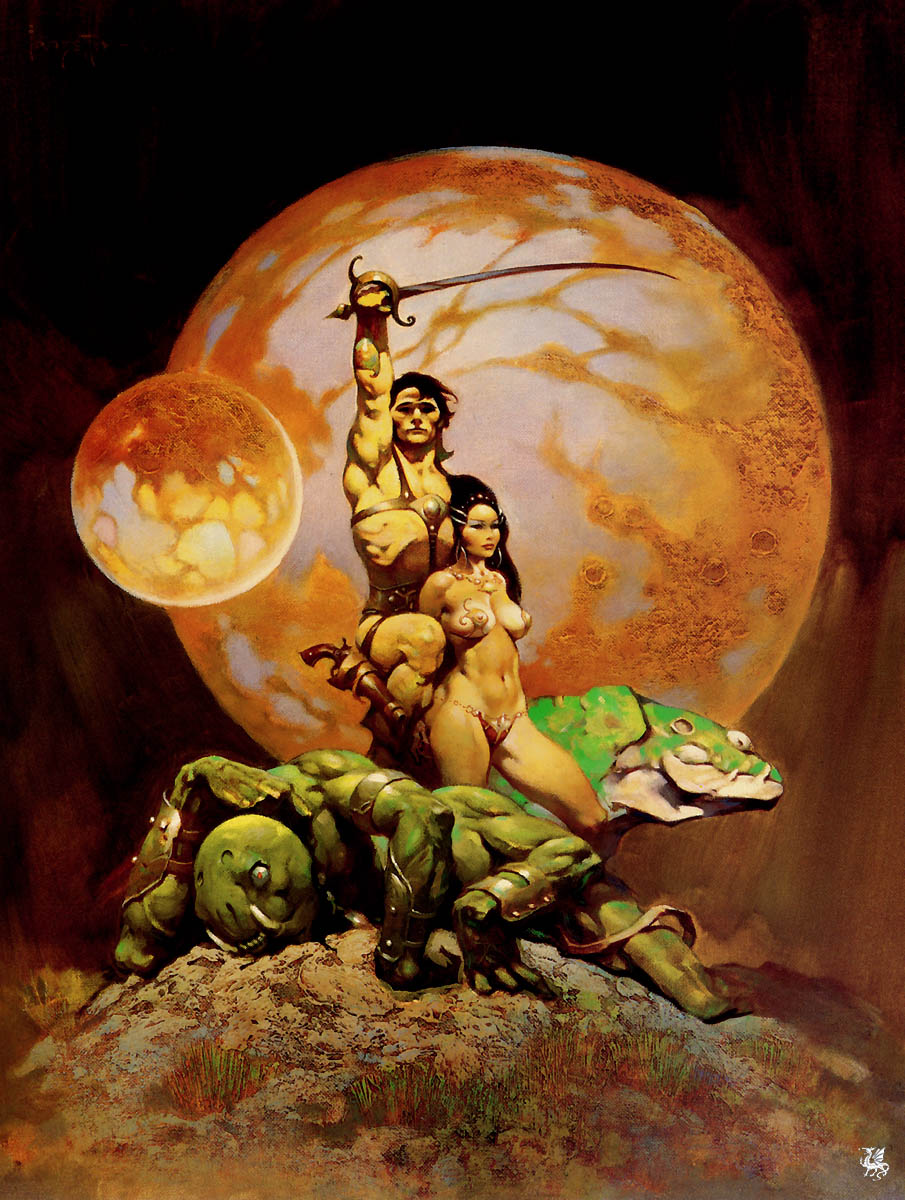
Frank Frazetta 1928-2010


One of the giants ...

The cause of death was a stroke.

More here.

Thursday, January 21, 2010

David Levine 1926-2009


You could spend today reading about David Levine, who passed away on the last Thursday of 2009 of prostate cancer.

Levine was one of the last -- maybe the last -- illustrators to be linked and branded with a particular publication.

He was the graphic artist of the New York Review of Books. His unique, painterly pen style defined the publication as Hirschfeld defined the NY Times Arts & Leisure section, and as Rea Irvin defined the initial New Yorker magazine look.

Levine's caricature technique was much admired. Ed Sorel, writing in Time Magazine, likened it to French cartoonist André Gill.

Tom Spurgeon has a wonderful write up on the artist's life here.

Mr. Levine was admired to the extent of other artists aping his style. Here is a small portion of an interview Gary Groth conducted:

GROTH: I think there’s a cartoonist working now who imitates you.

LEVINE: There are a number of them. Each one has something a little different. But basically, the only problem with that is generally, if somebody doesn’t use me but uses them because they’re less expensive, that kind of bothers me. And on one occasion, many years ago, there was a guy who was editor of the Atlantic Monthly, Robert Manning, and he hired somebody who did an entire issue of the magazine, full of caricatures, small drawings, but all of them total imitations. But he didn’t sign them. I have a feeling that was an editorial choice. Because I had done some work for them, I poked a little fun at them by sending the bill, as if I had done it. [Chuckle.] I never got a word back. It was a joke.

Other tributes to David Levine include Steven Heller, David Margolick, Steve Bell, Peter Kaplan and Steve Brodner.

Thanks to Journalista! and the Comics Reporter for the links.

Thursday, October 22, 2009

Ernie Colon Remembers George Tuska


Tom Spurgeon post this remembrance of George Tuska by comics artist Ernie Colon.

I've read it a couple of times now. Sad and touching. Worth going to the link and seeing what Mr. Colon has written.

------------------

My small story, but it's not really my story:

I have a local frame shop the next town over, where they all know me. "Oh, it's Mike who draws the cartoons. Hi Mike! Etc."

Now who doesn't like to be greeted like a celebrity when they walk into a joint, huh?

Anyway, they are a great group and they have done me some great work for me since I moved here in 2007.

One of the owners mentioned that her Dad was friends with a comic book artist. I probably never heard of him, she says. His name is George Tuska. I told her I knew who Tuska was, for sure. I read Tuska's 1970s Marvel comics.

She told me about years and years worth correspondence, between her father and Mr. Tuska, with Tuska doodling on all of the letters. They had known each other for years. I can't remember if they had met as kids or what. Her mother, she told me, has all of the letters and they are considered treasures, kept in a safe place.

I said that if she ever felt she would like to share these personal items with friends and fans of Mr. Tuska, I would be happy to put a selection on my blog.

This is all there is to it. Perhaps one day I'll be fortunate enough to share some of the doodles. Like I said, this isn't really my story. But isn't wonderful that George Tuska touched so many people?

Above graphic of "Mob Buster Robinson" by George Tuska nicked from Golden Age Comic Book Stories.